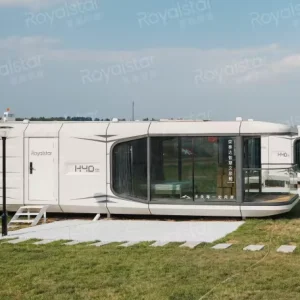
The Democratic Republic of the Congo (DRC) hosts some of the world's richest mineral deposits, notably within the Central African Copperbelt across the Lualaba and Haut-Katanga provinces. However, extracting these resources demands rapid construction of reliable industrial camps in remote locations such as Kolwezi, Likasi, and Manono. Compounding this challenge is the urgent need for humanitarian infrastructure in the eastern provinces (including North and South Kivu), where agencies require instant medical stations, command centers, and temporary housing.
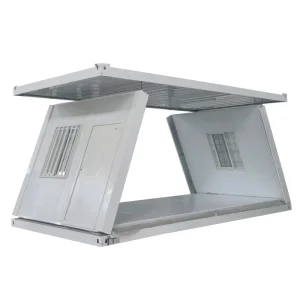
Establishing conventional brick-and-mortar structures in these remote zones presents severe logistical challenges. Heavy logistics corridors from neighboring ports like Dar es Salaam (Tanzania), Mombasa (Kenya), or Lobito (Angola) suffer from prolonged transit times, unpaved local road networks, and seasonal tropical rains. Consequently, industrial project developers, mining groups, and global procurement offices are transitioning toward heavy-duty modular rapid deployment housing systems that can be transported flat-packed, assembled without heavy machinery, and re-deployed across sites.
Modern remote camps are not merely structures; they must function as self-sustaining ecosystems. An effective rapid deployment housing program must integrate structural living spaces with key environmental controls, independent power generation, and reliable water purification.
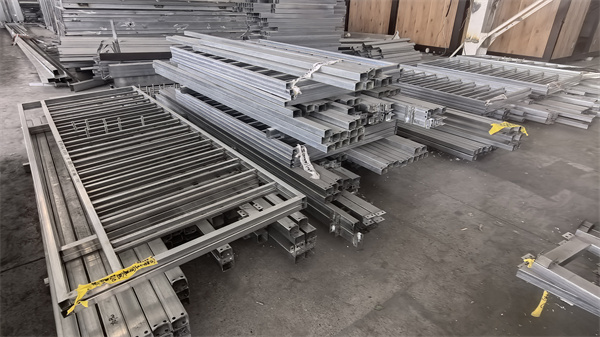
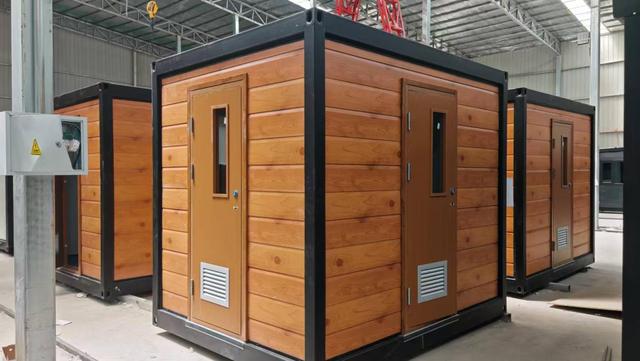
The DRC's equatorial climate subjects structures to prolonged periods of high relative humidity, heavy downpours, and intense UV exposure. Our systems utilize heavy hot-dip galvanized steel frames combined with fire-retardant Polyurethane (PU) or Rockwool sandwich panels. This composite structure prevents thermal bridging, reduces indoor cooling requirements by up to 40%, and provides long-term resistance to mold and wood-destroying insects like termites, which are common in forested regions.
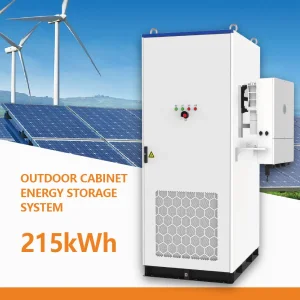
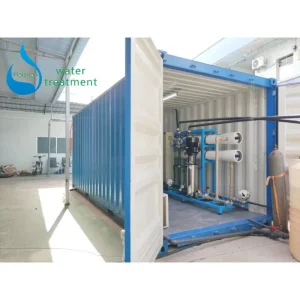
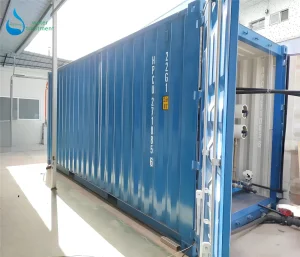
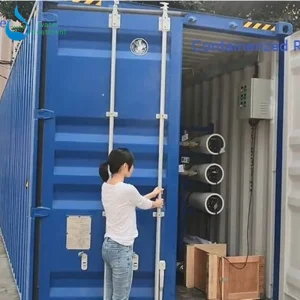
Remote operations cannot rely on local municipal grids or municipal water lines. By coupling modular flat-packs with containerized reverse osmosis (RO) systems and modular power storage containers containing complete solar backup setups, operators can secure immediate access to drinkable water and reliable electricity. These units are designed to withstand fluctuating water sources, from high-salinity underground mine water to muddy river water.
| Structural Component | Technical Specification | Operational Advantage in DRC |
|---|---|---|
| Steel Frame Structure | Q235B Hot-dip Galvanized Steel (Thickness ≥ 3.0mm) | Resists corrosion in high-humidity zones; structural life span > 20 years. |
| Insulation Panels | 75mm Polyurethane (PU) / High-density Rockwool (50kg/m³) | Class A Fire Rating; excellent sound insulation and thermal barrier. |
| Roof Load & Wind Rating | Snow/Rain load capacity 1.5 kN/m²; Wind resistance up to 120 km/h | Maintains integrity during tropical storms and heavy rain downpours. |
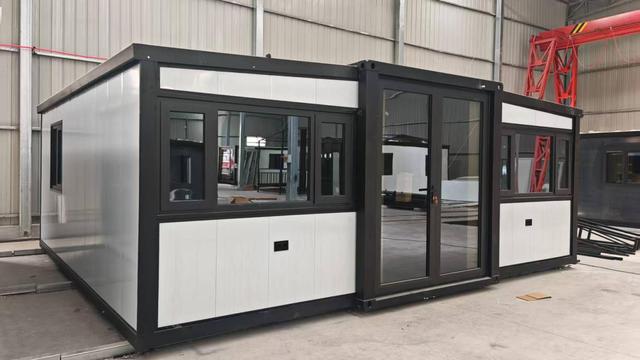
| Transport Logistics | Standard 20ft Flat Pack dimensions (5950 x 2438 x 2800 mm) | Allows 4 units to pack as 1 standard shipping bundle (SOC). |
Shipping components to landlocked regions of the DRC requires meticulous logistical planning. Our shipping department coordinates with clearing agents at major entry corridors:
We supply pre-sorted component kits with detailed, color-coded step-by-step schematics and assembly manuals. We also offer on-site supervision or online virtual engineering support to train local work crews. This approach minimizes reliance on highly specialized technicians, creating jobs for local communities and expediting project schedules.
Our manufacturing processes comply with strict international regulatory standards. Our modular designs are tested to meet ISO 9001 quality management benchmarks, ISO 14001 environmental safety regulations, and European CE structural requirements. This compliance guarantees that your camp will pass local audits conducted by DRC regulatory bodies and meet the corporate social responsibility (CSR) guidelines set by global financing institutions.
Dongguan Estable Living Co., Ltd. is a dynamic and innovation-driven manufacturer specializing in foldable housing and modular building solutions. Positioned as a Foldable House Manufacturer | Collapsible Modular Building Supplier | Rapid Deployment Housing Solutions provider, the company delivers efficient, portable, and cost-effective structures for global clients in construction, emergency response, mining camps, and temporary accommodation sectors.
Founded in 2012 in Dongguan, China, Estable Living began as a small-scale metal structure workshop focused on light steel fabrication. By 2015, the company expanded into prefabricated housing systems, recognizing the growing global demand for fast-installation and relocatable buildings. In 2018, Estable introduced its first generation of foldable container houses, significantly reducing installation time and transportation costs.
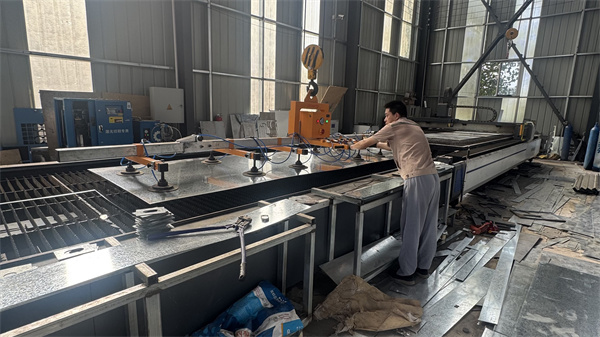
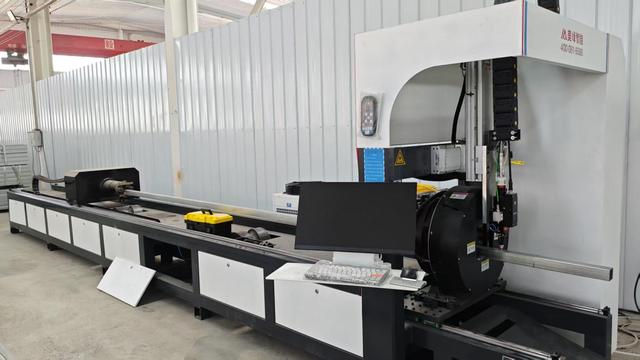
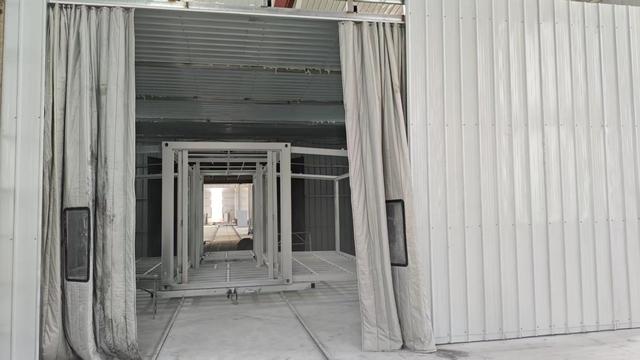
Driven by continuous R&D, the company upgraded its product line in 2021 to include advanced collapsible modular buildings with improved insulation, durability, and customizable layouts. Today, Estable Living operates modern production facilities equipped with automated cutting, welding, and assembly lines, ensuring consistent quality and scalable output.
With a strong commitment to innovation, sustainability, and customer-oriented design, Dongguan Estable Living Co., Ltd. has established long-term partnerships across Asia, the Middle East, Africa, and South America. The company continues to lead in rapid deployment housing solutions, offering reliable, flexible, and future-ready modular living spaces for a wide range of applications.
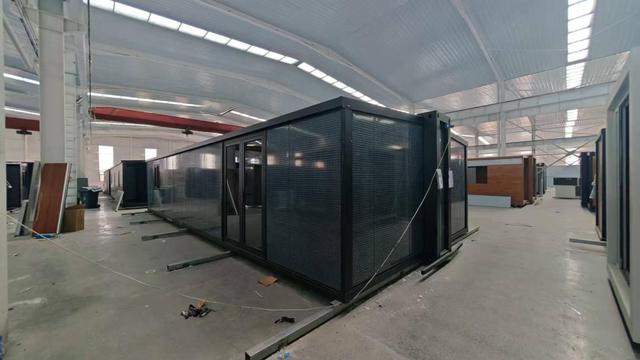
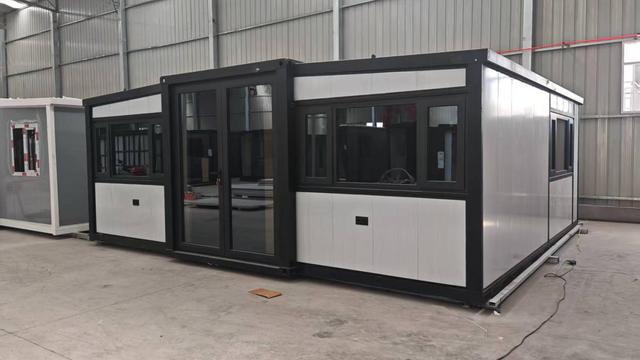
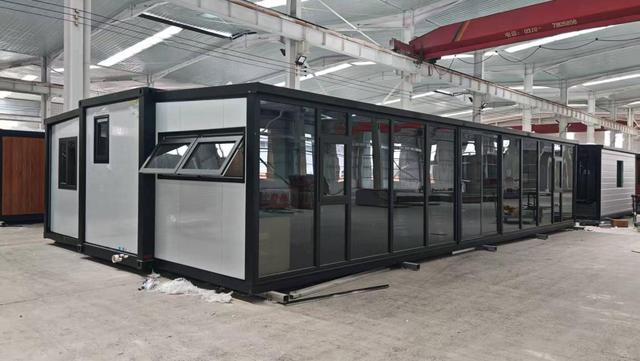
As industrial operators focus on carbon reduction, the next generation of rapid deployment housing is shifting toward environmental integration. Our R&D department is actively pursuing technologies that make modular camps smarter and more sustainable:
Contact our engineering specialists to receive a customized site plan layout, logistical transport routes to the DRC, and a detailed project cost estimate.
Send Inquiry Now Estable Living