How to Choose Energy Efficient Foldable Homes in 2026?

Time:2026-10-11 Author:Amelia
0%

How to Choose Energy Efficient Foldable Homes in 2026? The answer requires more than examining a compact floor plan. Many foldable homes use lightweight panels, factory-controlled construction, and efficient transportation. However, their performance depends on insulation thickness, airtight joints, window quality, and local climate.

Are foldable homes energy efficient? Sometimes. The structure alone does not guarantee low energy use. A home may fold neatly yet lose heat through hinges, seams, or poorly sealed service connections. During a 2026 evaluation, buyers should request U-values, air-leakage results, thermal-bridge details, and verified heating-load calculations. Ask for real utility data, not only attractive renderings.

Look closely at the details. Can the walls handle winter temperatures? Do windows provide low-e glazing? Is the ventilation system equipped with heat recovery? Can rooftop solar operate without shading from nearby trees? These questions reveal practical performance.

Carl Elefante, FAIA, a respected sustainable-design authority, said, “The greenest building is the one that is already built.” His principle encourages buyers to compare the home’s entire lifecycle, including materials, transport, maintenance, and replacement parts. A foldable design can reduce construction waste, but repeated relocation may increase emissions and damage seals.

There is no perfect model. That matters. The best choice balances measured efficiency, durability, repair access, and honest documentation. Before signing, inspect a completed unit, feel for drafts, and ask how the envelope performs after several years. Planning carefully can turn a convenient foldable home into a genuinely comfortable, lower-energy dwelling.
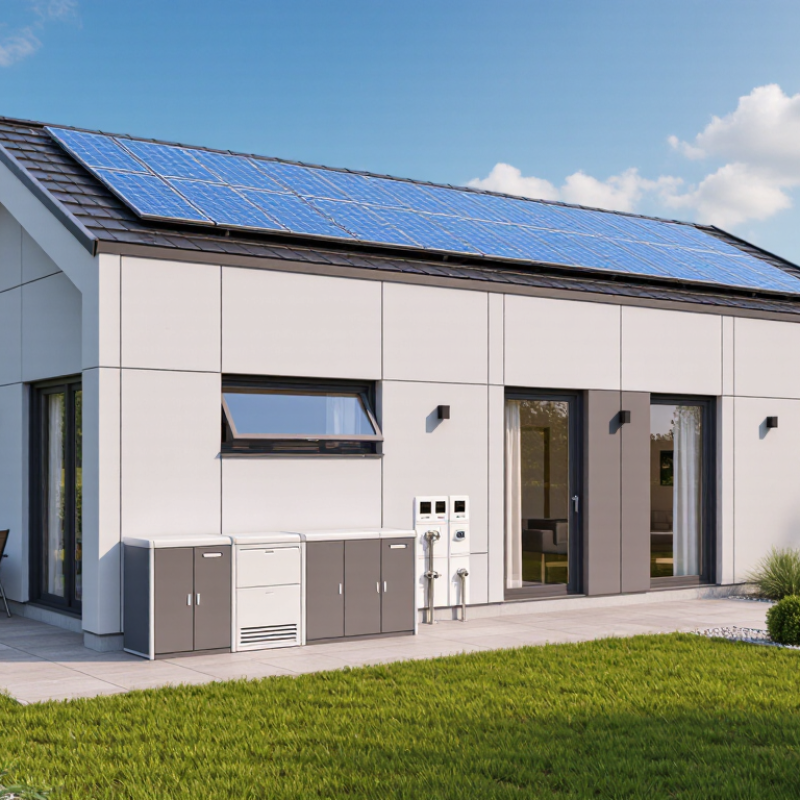
How to Choose Energy Efficient Foldable Homes in 2026?

What Makes a Foldable Home Energy Efficient in 2026?

In 2026, an energy-efficient foldable home is not defined by folding speed. It depends on the closed envelope after repeated movement. The GlobalABC and UNEP 2023 Global Status Report found that buildings used about 30% of global final energy and created 26% of energy-related emissions in 2022. Small envelope failures therefore matter. Hinges, roof seams, utility penetrations, and floor joints can create thermal bridges. A low U-value wall is not enough. Airtightness matters too.

Tips: Request blower-door testing before and after installation. The U.S. Department of Energy reports that air sealing may reduce annual heating and cooling costs by 10% to 20%. Ask for the measured air-leakage result, not only a product claim. Use continuous insulation around folding joints, low-emissivity glazing, insulated floor panels, and properly sealed service openings. Thermal imaging during a cold or hot day can reveal weak points quickly.

Choose controls that adjust ventilation, shading, and heating according to occupancy. However, software cannot repair a badly sealed corner. A 2024 energy model may also miss real behavior, such as doors remaining open during loading. I would compare predicted energy use with monthly meter readings after installation. That process is less glamorous, but more reliable. Check maintenance access, too. A seal that cannot be inspected may fail quietly.

How to Compare Insulation, Windows, and Thermal Performance

How to Choose Energy Efficient Foldable Homes in 2026?

How to Compare Insulation, Windows, and Thermal Performance

In a foldable home, insulation quality matters more than a thick wall alone. Check the insulation material, installed thickness, and continuity around hinges, floors, and roof joints. These folding areas can create thermal bridges. A professional inspection should include infrared scanning and an air-leakage test. Lower U-values usually indicate better insulation, but climate and construction quality still matter. I have seen well-insulated homes perform poorly because small gaps were ignored.

Tips: Ask for tested U-values, airtightness results, and condensation control details. Compare the complete wall system, not isolated materials. Examine floor insulation carefully. Cold floors quickly reveal weak thermal design.

Windows deserve equal attention. Choose frames with thermal breaks and glazing suited to your local climate. Low-emissivity glass can reduce heat loss, while carefully placed shading helps control summer heat. Check the window seals after repeated folding and transport. A perfect laboratory result may not survive rough installation. That is an uncomfortable point, but it matters. Thermal performance also depends on ventilation, door seals, and heating controls. Request documents from qualified assessors, then compare measured results instead of promises. No design is flawless.

Which Heating, Cooling, and Ventilation Systems Reduce Energy Use?

Choosing an energy-efficient foldable home starts with its heating, cooling, and ventilation design. A compact shell can warm quickly, but poor insulation still creates cold floor edges and overheated corners.

The International Energy Agency reports that space cooling uses nearly 10% of global electricity. That figure makes equipment selection important.

A high-efficiency heat pump usually deserves priority. The U.S. Department of Energy reports that air-source heat pumps can deliver two to four times more heat than the electricity they consume.

Choose a variable-speed model sized for the home’s real load, not its maximum floor area. Oversized systems cycle too often. That wastes energy.

Ventilation needs equal attention. An airtight foldable home should include balanced mechanical ventilation with heat recovery.

A 70% heat-recovery rate can preserve warmth while supplying fresh air, according to guidance from Natural Resources Canada. Place supply vents near sleeping areas and return vents away from cooking steam.

Cooling performance also depends on shading, reflective roofing, and sealed ductwork. The IEA warns that global cooling demand could more than triple by 2050 without efficiency improvements.

I would not trust a low-energy claim without measured airflow, seasonal efficiency data, and commissioning records. Small homes expose mistakes quickly.

How to Assess Solar Power, Smart Controls, and Energy Storage

Choosing an energy-efficient foldable home starts with its real energy profile, not its advertised solar capacity. Observe the site at different times. Roof shade, nearby trees, and seasonal sunlight can change production sharply. A practical assessment should compare expected solar output with heating, cooling, cooking, and water-heating demand.

Smart controls should manage energy without making daily life complicated. Check whether sensors can adjust heating when rooms are empty. Confirm that controls respond to indoor temperature, humidity, and electricity prices where permitted. Test the manual settings, too. Technology can fail. During my own energy reviews, simple controls often proved more dependable than crowded dashboards. The system should also record consumption clearly, using readable data rather than confusing charts.

Energy storage needs closer inspection. Compare usable capacity, charging speed, round-trip efficiency, and performance in cold or hot conditions. A battery rated at ten kilowatt-hours may provide less usable energy after reserve limits. Ask how it behaves during an outage and whether essential circuits are separated safely. Local electrical rules and qualified installation matter. I once overestimated battery value by ignoring evening heating loads. That mistake showed why hourly data is more useful than daily averages. Leave room for uncertainty. Solar forecasts are estimates, and household habits change. A reliable design allows future expansion without forcing unnecessary equipment today.

How to Choose Energy Efficient Foldable Homes in 2026? - How to Assess Solar Power, Smart Controls, and Energy Storage

Practical assessment framework for comparing foldable homes without relying on brand-specific claims
Assessment Area What to Measure Strong Target for 2026 Why It Matters Verification Method Suggested Weight
Building envelope Air leakage, insulation continuity, thermal bridges, window performance Airtightness of approximately 1.5 ACH50 or lower; continuous insulation; low-emissivity double or triple glazing where climate requires it Reducing heating and cooling demand is usually more cost-effective than adding larger mechanical or solar systems Request an independent blower-door test, thermal-bridge details, insulation R-values/U-values, and window specifications 20%
Solar-ready roof Usable roof area, orientation, tilt, shading, structural capacity, cable routes Unshaded roof area with safe load capacity and a clear route to the inverter and electrical panel Foldable designs may have limited roof area, and structural or shading constraints can reduce solar output Review structural drawings, roof plan, shading analysis, local snow/wind loads, and installation clearances 8%
Solar photovoltaic system Rated capacity, annual yield, inverter efficiency, degradation, monitoring Use a site-specific estimate; a broad planning range is about 900–1,500 kWh per installed kW per year, depending on location, orientation, climate, and shading Installed capacity alone does not show how much electricity the home will generate Compare a solar simulation using local weather data, documented system losses, inverter efficiency, and an expected annual production figure 15%
Solar self-consumption Daytime load, export rate, demand profile, controllable appliances Model self-consumption and grid export separately; do not assume every generated kilowatt-hour is used on-site Economic value depends on local electricity tariffs, export rules, and when the household uses power Use hourly or 15-minute load data, utility tariffs, and at least three operating scenarios: low, typical, and high demand 8%
Smart energy controls Load scheduling, thermostat control, occupancy sensing, solar diversion, demand response Open-protocol controls with manual override, local operation, scheduling, and integration with meters, HVAC, solar, and storage Controls can shift flexible loads and reduce waste, but savings depend on occupant behavior and system configuration Request a live demonstration, control logic, fallback behavior during internet outages, and documented energy-saving assumptions 12%
Heating and cooling Seasonal efficiency, capacity, low-temperature performance, ventilation, auxiliary heat Efficient heat pump sized from a room-by-room load calculation; seasonal COP or equivalent efficiency documented for the local climate Heating and cooling often dominate residential energy use, especially in poorly insulated compact homes Ask for a heat-loss calculation, seasonal performance data, operating temperature range, and ventilation design 12%
Battery energy storage Usable capacity, continuous power, round-trip efficiency, depth of discharge, cycle warranty Use usable rather than nominal capacity; typical modern systems may provide approximately 85–95% round-trip efficiency, subject to operating conditions A larger battery is not automatically better if the home has low evening demand or limited solar generation Check independent test data, usable kWh, continuous kW, minimum reserve, temperature limits, degradation terms, and warranty conditions 10%
Backup capability Transfer time, backed-up circuits, black-start capability, solar operation during outages Clearly defined essential-load panel, automatic transfer, documented backup duration, and safe islanding protection Many grid-connected batteries do not provide backup unless additional switching and circuit design are installed Request a single-line electrical diagram, outage test procedure, supported loads, and local electrical approval documents 5%
Domestic hot water Water-heater efficiency, tank size, insulation, scheduling, solar diversion Efficient heat-pump water heating or another high-efficiency system with insulated pipework and programmable operation Hot-water production is a flexible load that can often be shifted to periods of solar surplus Check rated energy factor or equivalent efficiency, standby losses, recovery time, noise, and control compatibility 5%
Electrical system and expandability Panel capacity, wiring, protection devices, future solar and battery connection points Code-compliant electrical design with spare capacity and documented maximum PV, inverter, and battery limits Retrofitting a compact or transportable home can be expensive if conduits, panels, or service capacity are inadequate Obtain the electrical schedule, protection coordination, service rating, permits, and future expansion limits 3%
Lifecycle cost Upfront cost, installation, maintenance, replacement, electricity, financing, and disposal Compare total cost of ownership over at least 10–15 years using conservative energy-price and equipment-life assumptions The lowest purchase price may lead to higher energy, replacement, or maintenance costs Build a transparent spreadsheet with sensitivity tests for energy prices, battery replacement, solar degradation, and maintenance 2%
Total Suggested Weight 100%
Scoring guidance: Rate each category from 0 to 5. Multiply the rating by the suggested weight, then add the results. Give priority to independently verified performance data, complete installation documentation, and climate-specific energy modeling rather than headline capacity figures.
Key calculation reminders: Solar output varies substantially by location and shading; battery capacity should be assessed using usable kWh and continuous kW; smart-control savings are not guaranteed and depend on schedules and occupant behavior; backup operation requires compatible transfer equipment and correctly separated circuits.

How to Verify Certifications, Running Costs, and Long-Term Value

How to Choose Energy Efficient Foldable Homes in 2026

How to Verify Certifications, Running Costs, and Long-Term Value

When comparing foldable homes, treat a certificate as evidence, not decoration. Ask for the certificate number, issuing body, test standard, covered model, and expiry date. Verify those details through the issuer’s public register or direct contact. A copied PDF proves very little. Check the small print. Certifications may apply only to materials, not the completed home.

Energy claims should match local conditions. Request U-values for the walls, roof, windows, and floor, plus air-leakage results. Then estimate annual electricity use using local temperatures, occupancy, tariffs, and heating equipment. Ask whether estimates include standby power, water heating, delivery, installation, and foundation work. A low purchase price can hide expensive preparation. Use real utility bills where possible. Energy models are estimates, not promises.

Long-term value depends on more than insulation. Have an independent building professional inspect folding joints, seals, drainage paths, corrosion protection, and replacement access. Ask for warranty exclusions and documented maintenance intervals. Confirm that local authorities accept the structure and that insurers will cover it. Resale may be limited if transport damages finishes or replacement parts become unavailable. I would keep a repair reserve, even with strong paperwork. Certification can also age faster than the building. Recheck standards before signing.

FAQS

What makes a foldable home energy efficient?

Its closed envelope must remain airtight after repeated folding. Small gaps matter. Check hinges, roof seams, floor joints, and utility openings.

Why is airtightness important?

Air leaks waste heating and cooling energy. They can also create cold corners and condensation. Low wall U-values alone are not enough.

How can airtightness be tested?

Request blower-door testing before and after installation. Ask for measured leakage results. Do not rely only on advertised performance claims.

Which materials improve thermal performance?

Use continuous insulation around folding joints. Add low-emissivity glazing and insulated floor panels. Seal every service opening carefully.

Can thermal imaging find energy weaknesses?

Yes. A scan during a cold or hot day can reveal weak joints quickly. It may show heat escaping near a hinge or roof seam.

How should smart controls manage energy use?

Controls should adjust heating, ventilation, and shading for room occupancy. They should also respond to temperature and humidity. Manual settings must remain simple.

What should be checked before adding solar power?

Observe sunlight at different times. Roof shade, nearby trees, and seasonal changes affect output. Compare solar production with heating, cooking, and water-heating demand.

How should a battery system be assessed?

Compare usable capacity, charging speed, efficiency, and hot or cold performance. A ten-kilowatt-hour battery may deliver less usable energy. Check outage operation and essential circuits.

Are energy models always reliable?

No. A model may miss open doors during loading or evening heating habits. Compare predictions with monthly meter readings. Hourly data is better, though still imperfect.

What maintenance details matter?

Keep seals accessible for inspection and replacement. A hidden seal may fail quietly. Leave expansion space for future solar or storage needs.

Conclusion

Choosing an energy-efficient foldable home in 2026 requires more than looking at its compact design. The key question is: are foldable homes energy efficient? Their performance depends on well-insulated walls, roofs, and floors, high-quality windows, airtight construction, and strong thermal protection at folding joints. Buyers should compare insulation materials, glazing options, heat-loss ratings, and overall building performance rather than relying only on advertised energy claims.

Efficient heating, cooling, and ventilation systems can significantly reduce daily energy use, especially when paired with smart thermostats, automatic controls, solar power, and suitable energy storage. It is also important to verify recognized certifications, estimated annual running costs, maintenance needs, and expected durability. A home with a higher initial price may provide better long-term value if it uses less energy, remains comfortable in changing weather, and supports reliable renewable power. Careful evaluation of construction quality, system integration, and lifetime costs will help buyers choose a practical and sustainable foldable home.

Amelia

Amelia

Amelia is a seasoned marketing professional with a wealth of expertise in our company’s core offerings. With an unwavering passion for driving growth and innovation, she plays a pivotal role in shaping our marketing strategies and enhancing brand visibility. A key aspect of her responsibilities......